

Fed conundrum: Are rates restrictive?
Raymond James Chief Economist Eugenio J. Alemán discusses current economic conditions.
Markets had already begun revising their views on the path of interest rates ahead of last week’s Federal Open Market Committee (FOMC) meeting, but those revisions gained momentum following the decision, the updated dot plot, and – perhaps most importantly – the lack of clarity around what Federal Reserve (Fed) officials are thinking going forward. This absence of communication reflects a deliberate shift: New Fed Chair Kevin Warsh has effectively stepped away from forward guidance at the outset of his tenure.
From our experience participating in Fed meetings, we know that the dot plot has never been universally embraced within the institution. The concern was not that it lacked informational value, but rather that markets interpreted it as a forecast, which was never its intended purpose. Forward guidance is meant to shape expectations and influence behavior, not to serve as a firm prediction of future policy decisions.
Chair Warsh did not eliminate the dot plot at his first FOMC meeting, although notably he did not contribute to it. That omission has already fueled speculation that the tool may eventually be phased out. Given that the dot plot has served as one of the Fed’s primary mechanisms for forward guidance, its long-term survival appears uncertain. Removing it outright at the first meeting may have been a step too far, but its role as a legacy communication tool from an earlier policy framework is increasingly evident. The same could ultimately be said for the Summary of Economic Projections (SEP), which also functions as a forward guidance mechanism. Once the ongoing review of the inflation framework is complete, the SEP could face similar scrutiny.
Turning to rates, as recently as April the Powell-led Fed maintained that policy was still restrictive, implying no immediate need for further tightening to bring inflation down. The Warsh Fed; however, appears to hold a different view. Chair Warsh has suggested that rates are restrictive only in the housing sector. If that is indeed the case, it strengthens the argument for additional rate increases, a view seemingly reflected in the latest dot plot. Yet the Fed chose not to act at this meeting.
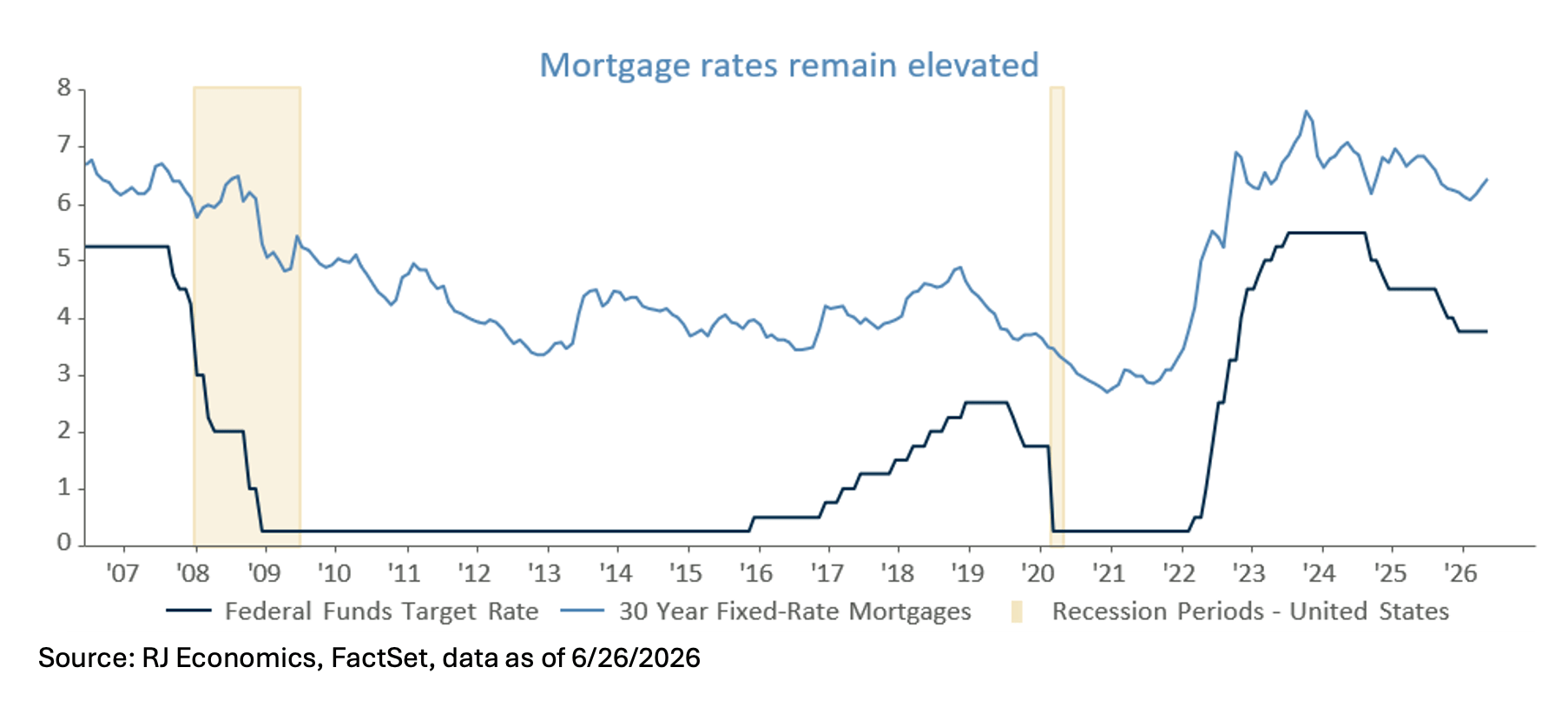
This is precisely where forward guidance would have been most valuable. Greater transparency around the decision – how the vote broke down, the rationale behind holding steady, and the conditions that might trigger action – would have helped anchor market expectations. In its absence, markets are left to speculate.
As we argued last week, one plausible explanation is that the FOMC reached a compromise, opting to wait for the conclusions of the task force reviewing the Fed’s inflation framework before making its next move. If so, this effectively delays policy action until that framework is finalized. This approach carries risks, particularly if inflation, and especially the core Personal Consumption Expenditures (PCE) price index, trends higher and the Fed is forced to act more aggressively later – especially given Chair Warsh’s own remarks about the Fed having been late to respond in the past.
That said, if energy prices stabilize or decline, there is a reasonable case that May will prove to be the peak in year-over-year inflation for 2026, at least for the headline PCE price index. At the same time, the political backdrop will increasingly complicate any decision to raise rates ahead of the November midterm elections. Even if Chair Warsh believes further tightening is warranted, he still requires majority support within the FOMC.
This raises a fundamental question: If the prevailing view is that policy is not sufficiently restrictive, and the dot plot reflects that bias, why wait? The lack of action suggests either limited conviction or constraints – whether institutional, analytical or political.
As things stand, any rate move is likely to be pushed to the December meeting, unless core inflation accelerates meaningfully and forces the Fed’s hand. However, if headline inflation continues to moderate and core measures remain contained, the need for additional tightening fades. Our base case is that inflation will ease further, with year-over-year PCE inflation declining to around 3.6% by year-end. Under that scenario, we expect the Fed to remain on hold through the end of the year.
Economic and market conditions are subject to change.
Opinions are those of Investment Strategy and not necessarily those of Raymond James and are subject to change without notice. The information has been obtained from sources considered to be reliable, but we do not guarantee that the foregoing material is accurate or complete. There is no assurance any of the trends mentioned will continue or forecasts will occur. Past performance may not be indicative of future results.